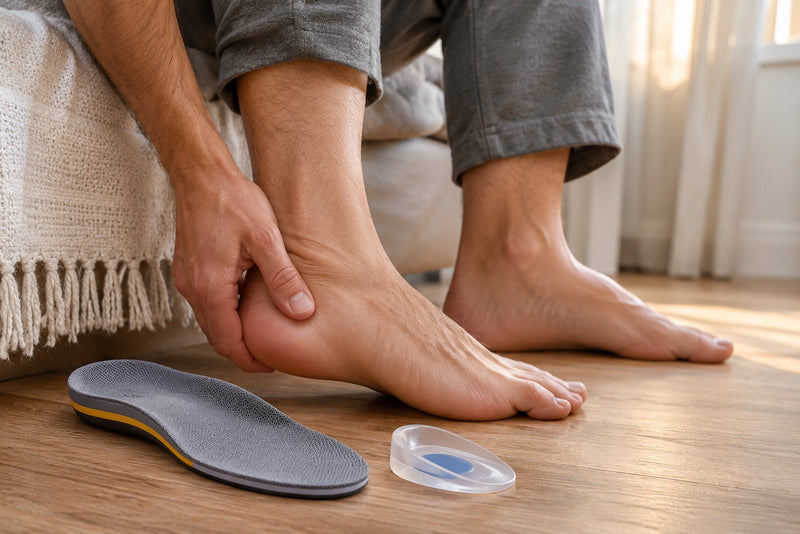
Why do my feet hurt after standing all day?
Aching soles, burning heels and tired legs after a shift are common. Here are the usual causes and nine practical fixes, from footwear and insoles to quick stretches.

Quick answer
If you work in a warehouse, a kitchen, retail, a hospital ward or on a production line, you probably know the feeling: by mid-afternoon your heels throb, the balls of your feet burn and you can’t wait to take your shoes off. It is one of the most common complaints from people who stand for a living, and in most cases it is a load problem you can do a lot about.
The 5 most common causes
Hours of static load
Standing still is harder on the feet than walking. Muscles stay tense and blood pools in the lower legs, so feet swell and ache.
Hard floors
Concrete and tiles don’t give. Every bit of shock goes into the heel and the ball of the foot instead of the floor.
Little or no arch support
Flat, thin insoles let the arch drop through the day, which strains the plantar fascia and tires the muscles of the foot.
Worn-out cushioning
Foam compresses over time. Shoes that felt fine six months ago may now give almost no shock absorption.
Shoes that don’t fit
Too tight and the toes and forefoot rub and swell; too loose and the foot slides and grips with every step.
Heat and sweat
Hot, damp feet swell more, blister more easily and feel sore sooner, especially in non-breathable shoes.
9 fixes that work
-
1
Choose cushioned, supportive work shoes
Look for a shock-absorbing midsole, a firm heel counter and a shape that matches your foot. If you need protection, modern trainer-style safety shoes give a steel toe cap without the weight of an old-style boot.
-
2
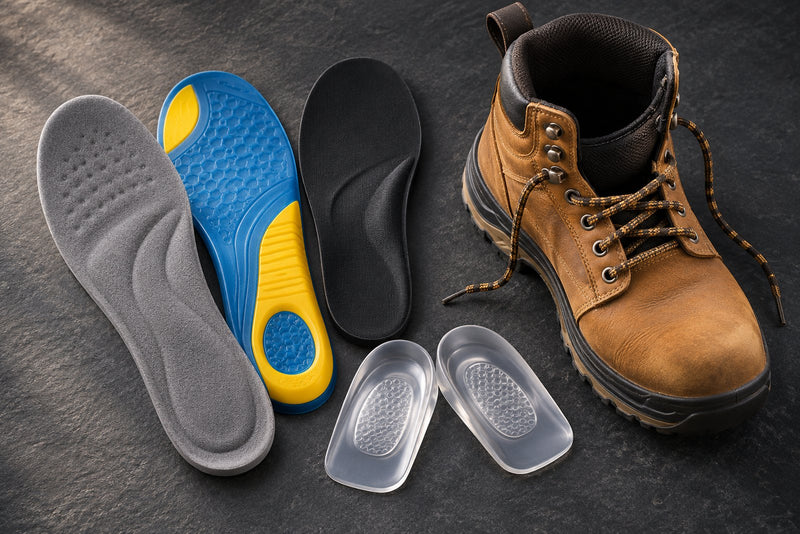
Add a supportive insole
A memory-foam or gel insole spreads pressure across the whole sole, and an arch support stops the arch collapsing as you tire. It is the cheapest upgrade for shoes you already own.
-
3
Rotate two pairs
Foam needs about a day to recover its shape. Alternating two pairs keeps the cushioning working longer and lets shoes dry out.
-
4
Break up the standing
Shift your weight, walk a few steps every 20–30 minutes and sit for a minute when you can. Movement keeps blood flowing and muscles from locking up.
-
5
Stretch your calves and soles
Tight calves pull on the heel and the plantar fascia. Thirty seconds of calf stretch against a wall and a few rolls of the sole over a bottle are enough to feel a difference.
-
6
Use an anti-fatigue mat where you stand still
At a till, bench or packing station, a cushioned mat takes some of the shock that hard floors pass straight up.
-
7
Wear the right socks
Breathable, cushioned work socks without thick seams reduce rubbing and keep feet drier than cotton.
-
8
Cool and raise your feet after work
Ten minutes with your feet up, and a cool (not icy) foot soak, helps swelling go down.
-
9
Replace shoes when the cushioning is gone
If the midsole has creases, the heel is worn down on one side or the shoe feels flat, it is time for a new pair.
Easy upgrades for the shoes you already have


What to look for in work shoes
If you stand for long hours, these features matter more than the brand name:
- A cushioned, shock-absorbing sole that compresses slightly when you press it
- A removable insole, so you can swap in an arch support or gel insole
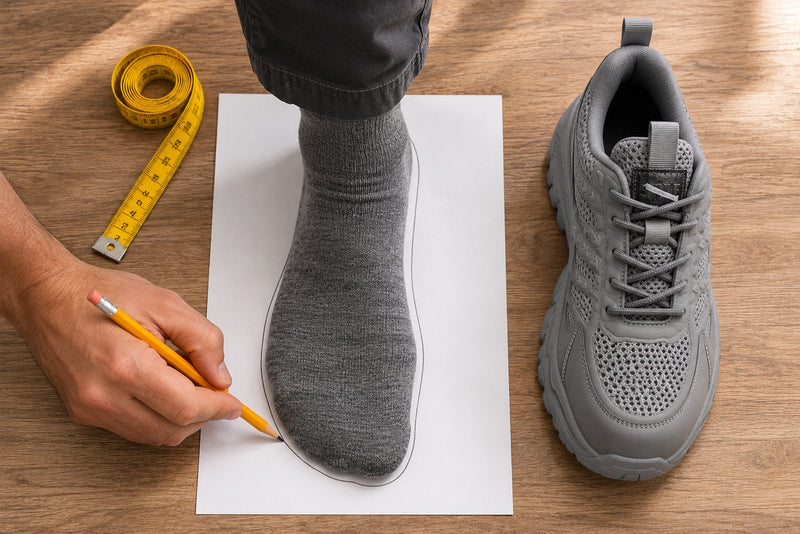
- Enough room in the toe box for your toes to spread (about a thumb’s width at the front)
- A breathable upper with mesh or anti-odour lining
- If your job needs it, a certified safety rating: see our safety ratings guide
Our safety shoes are built on that brief: trainer-weight, a steel toe cap tested to 200 J, a Kevlar anti-perforation midsole and a high-foam insole. If you don’t need protective footwear, our walking shoes give the same all-day cushioning without a toe cap.
Comfortable safety shoes for long shifts


When to get it checked
Most tired, achy feet improve with better shoes, insoles and rest. Speak to a GP, pharmacist or podiatrist if:
- the pain is sharp, getting worse or stops you working
- it is worst with your first steps in the morning (a classic sign of plantar fasciitis)
- you have numbness, tingling, a change in skin colour or swelling in one foot only
- you have diabetes and any foot pain or skin damage
This guide is general information, not medical advice
Frequently asked questions
Is it normal for feet to hurt after a 12-hour shift?
Do insoles really help with standing all day?
Are safety shoes worse for your feet than trainers?
How often should I replace work shoes?
Built for feet that work for a living
Lightweight safety shoes, insoles and supports with free UK delivery and 30-day exchanges.