The most comfortable safety shoes for 12-hour shifts
Comfort over a 12-hour shift comes down to weight, cushioning, fit and breathability. Here is what to look for and the ElytStep models built for long days.

Quick answer
What makes a safety shoe comfortable
Low weight
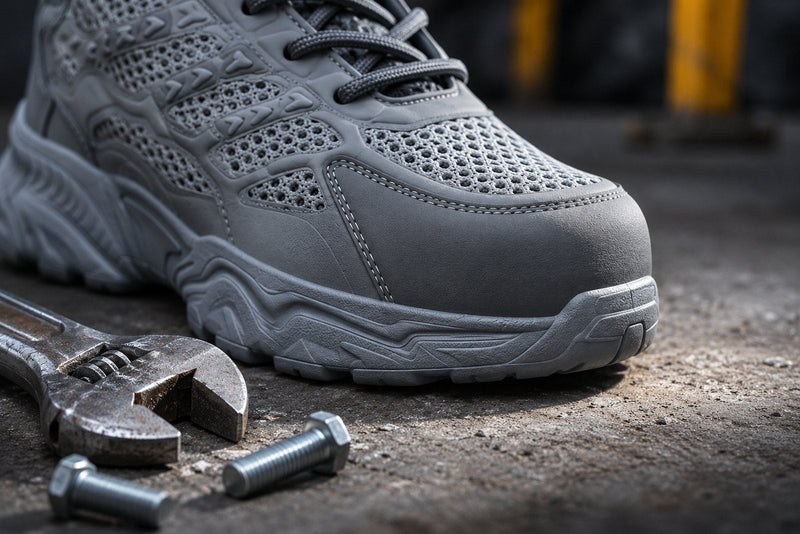
Every extra gram is lifted thousands of times a shift. Trainer-weight safety shoes reduce fatigue in the legs.
Cushioned sole
A shock-absorbing midsole and high-foam insole take the sting out of concrete floors.
Room for your toes
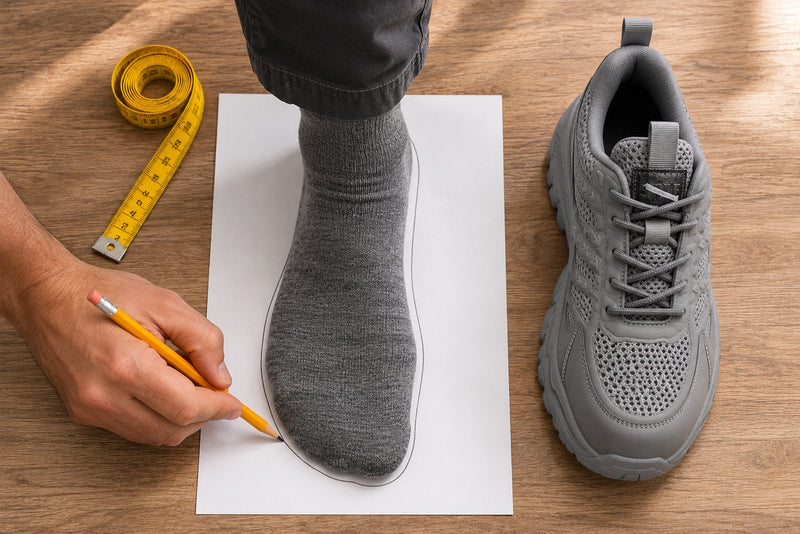
The toe cap shouldn’t touch your toes. Feet swell during a shift, so leave space.
Breathable upper
Mesh and anti-odour linings keep feet cooler and drier, which means fewer blisters.
Flexible puncture protection
A textile (Kevlar) midsole protects against nails while staying more flexible than a steel plate.
Removable insole
Lets you add arch support or extra cushioning without changing shoes.
Our picks by job
| If you… | Try | Why |
|---|---|---|
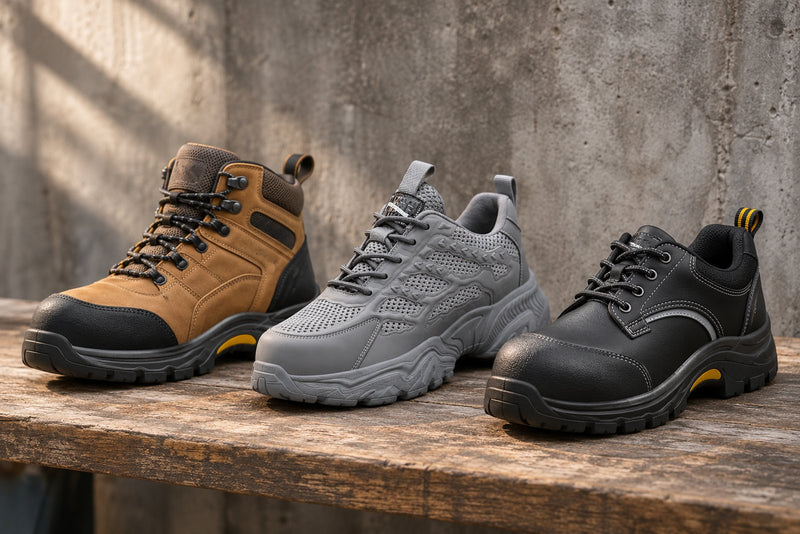
| Walk all day in a warehouse | ELYTLITE+ | Our most popular model: trainer weight, steel toe, Kevlar midsole, breathable upper |
| Stand on hard floors and have sore feet | OrthoSAFE® | Orthopaedic support and a cushioning sole for long days |
| Get hot, sweaty feet | AirDRY® | Breathable build and a rotary lacing system for a quick, even fit |
| Work in a kitchen | Safe® PRO | Anti-slip outsole for wet, greasy floors |
| Need a classic trainer look | ELYTPEAK | Lightweight trainer style with full SB P protection |
| Work outside or on site | ELYTFLEX | S3, water-resistant, ankle height |
Built for long shifts


What customers say
6 tips for long shifts
-
1
Buy for the end of the day
Try shoes on in the afternoon with your work socks; feet are larger after hours of standing. See our fit guide.
-
2
Upgrade the insole
A memory-foam or gel insole is the cheapest comfort boost. Our insole guide explains which to choose.
-
3
Lace for your foot
Lock the heel in place with the top eyelets; loosen across the widest part of the foot if it presses.
-
4
Rotate two pairs
Cushioning recovers and shoes dry out between shifts.
-
5
Stretch in your breaks
Thirty seconds of calf stretch on each side helps tired legs and heels.
-
6
Replace worn shoes
Flat cushioning or an uneven heel means it is time for a new pair.
Why feet swell on long shifts, and what to do
After hours of standing, feet swell noticeably as fluid collects in the lower legs. A shoe that fits perfectly at 8am can pinch by 4pm. That is why toe space matters so much in safety footwear: the toe cap doesn’t move. Breathable uppers help too, because hot feet swell more than cool ones.
- Leave a thumb’s width of space in front of your toes
- Choose mesh or breathable uppers for warm workplaces
- Loosen your laces slightly at lunch if your feet feel tight
- Put your feet up for ten minutes after work
Add-on comfort


Frequently asked questions
Are lightweight safety shoes as safe as heavy ones?
Steel toe or composite for comfort?
How do I stop my feet aching in safety shoes?
Do I need to break in safety shoes?
Safety shoes made for 12-hour days
Trainer-weight protection with free UK delivery and 30-day exchanges.