Best insoles for work boots and standing all day
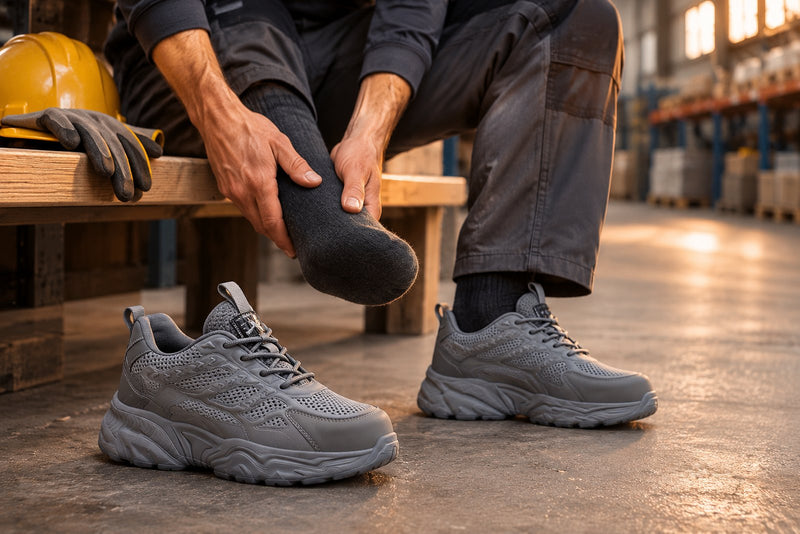
The right insole can make your current work boots feel new. Here is how memory foam, gel, arch supports, heel pads and heated insoles compare, and which to choose.

Quick answer
Which insole for which problem
| If you have… | Choose | Our pick |
|---|---|---|
| Tired, aching feet after long shifts | Memory foam with heel cup | ComfortSTEP® |
| Hard floors and joint aches | Gel cushioning with arch support | SoftCUSH® |
| Flat feet or arch pain | Arch-support insole | ArchFIT® |
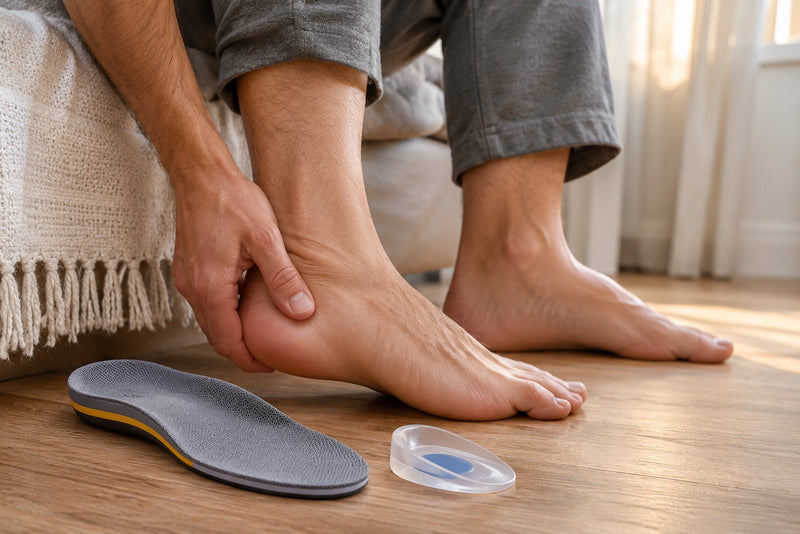
| Heel pain | Silicone heel pad | HeelPRO® |
| Cold feet outdoors | Heated insole | HeatMAX® |
Our insoles


The main types compared
Memory foam
Moulds to your foot and spreads pressure evenly. Very comfortable from the first wear; a heel cup adds stability.
Gel
Absorbs impact well on concrete and hard floors. Often combined with arch support.
Arch support
A firmer shape under the arch stops it flattening as you tire. Helpful for flat feet and plantar fascia strain.
Heel pads
Small, washable silicone cups that cushion heel strike. Quick to swap between shoes.
Heated
Battery or rechargeable heating for cold stores, winter sites and outdoor work.
Odour and moisture control
Aerated or breathable top layers keep feet drier on long shifts.
Cushioning plus support
How to fit an insole in work boots
-
1
Take out the original insole
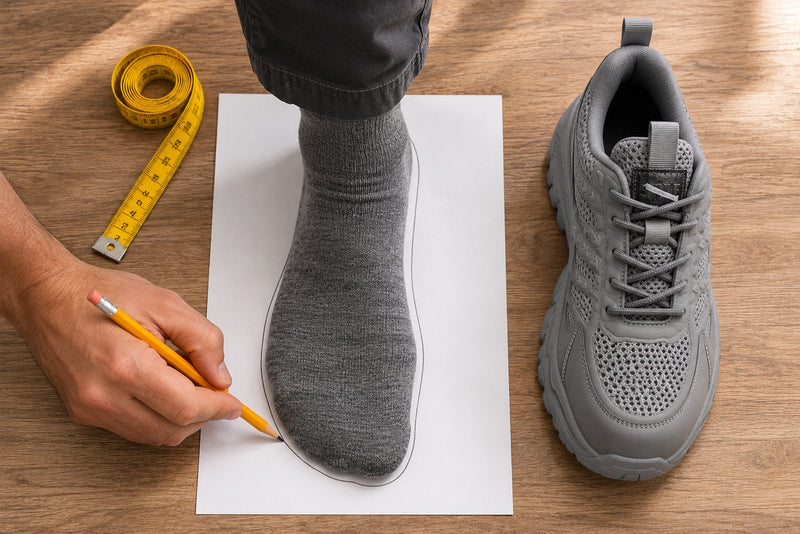
Most safety shoes and boots have a removable insole. Use it as a template.
-
2
Trim to size
Lay the old insole on top and trim the new one along the size line or outline. Cut a little at a time.
-
3
Check toe space
With the new insole in, you should still have about a thumb’s width in front of your toes, and they shouldn’t touch the toe cap. See our fit guide.
-
4
Wear it in gradually
Arch supports can feel firm at first. Start with a few hours a day.
Insoles work best in footwear with good bones: a firm heel and a sole that isn’t worn out. If your boots are flat and creased, read the most comfortable safety shoes for long shifts.
Safety shoes with removable insoles


Insoles vs orthotics: what is the difference?
An insole is a ready-made layer that adds cushioning and some support to the shoe. An orthotic is designed to change how the foot is supported or aligned, from firmer off-the-shelf arch supports to custom devices made by a podiatrist. For general comfort on long shifts, a good insole is usually enough. If you have a diagnosed foot condition, ask your podiatrist whether you need an orthotic.
| Insole | Orthotic | |
|---|---|---|
| Main job | Cushioning and comfort | Support and alignment |
| Feel | Soft to medium | Medium to firm |
| Who it suits | Most people on their feet all day | Flat feet, specific foot conditions |
| Where to get it | Off the shelf | Off the shelf or custom from a podiatrist |
Browse our orthotics if you need firmer support, or stay with the insoles for everyday comfort.
Care and replacement
- Take insoles out to air dry after each shift
- Hand-wash silicone and gel insoles; avoid radiators and tumble dryers
- Replace when the foam stays flat, the gel splits or the top layer wears through
- For full-time standing work, many people replace insoles every 6–12 months
Pain that doesn’t go away
Frequently asked questions
What are the best insoles for standing all day?
Do insoles fit in safety boots?
Are gel or foam insoles better?
How long do insoles last?
Make your work boots feel new
Insoles for every kind of work shoe, with free UK delivery and 30-day exchanges.