Plantar fasciitis at work: what actually helps
Sharp heel pain with your first steps in the morning is the classic sign of plantar fasciitis. Here is what helps if you are on your feet at work, and when to get it checked.

Quick answer
What plantar fasciitis is
The plantar fascia runs from your heel bone to the base of your toes and supports the arch like a bowstring. When it is overloaded, it becomes irritated where it attaches to the heel. The typical signs are:
Pain under the heel or arch
Usually on one side, felt as a sharp or stabbing pain.
Worst first thing
The first steps after sleep or a long sit hurt most, then it eases as you move.
Returns after long standing
It comes back at the end of a shift or after a lot of walking.
Hurts when the sole stretches
Climbing stairs or lifting your toes can bring it on.
Why it is common at work
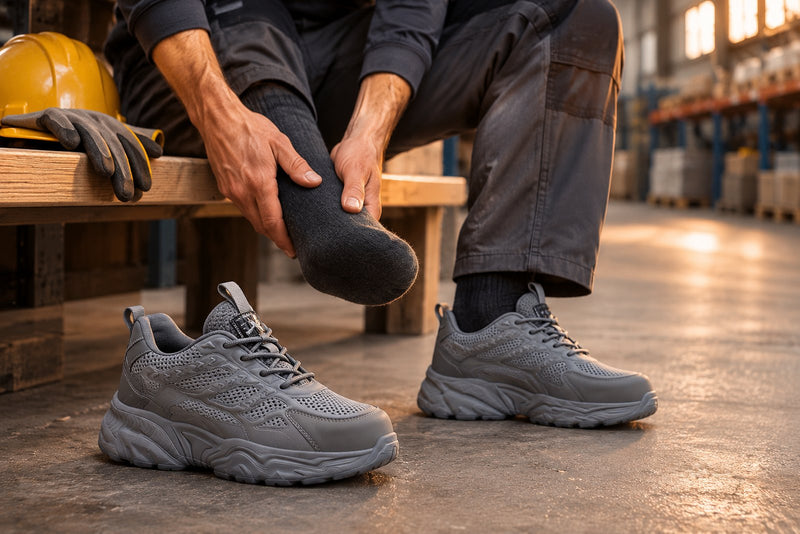
NHS guidance lists long periods of standing or walking, hard surfaces, tight calf muscles, a sudden increase in activity and shoes with poor cushioning or support among the things that make plantar fasciitis more likely. Many jobs tick several of those boxes at once: twelve hours on concrete, in stiff footwear, with no time to stretch.
A new job is a common trigger
What actually helps
| What to do | Why it helps | How |
|---|---|---|
| Cushioned, supportive shoes | Reduces the shock and stretch on the fascia | Firm heel, cushioned sole, some arch support; avoid flat, worn-out shoes |
| Insoles or heel pads | Spread pressure and cushion the heel | Soft insoles, an arch support or a silicone heel cup |
| Calf and foot stretches | Tight calves pull on the heel | A few minutes, several times a day |
| Rest and raise the foot | Calms the irritation | Sit with the foot up when you can |
| Ice | Eases pain after a shift | Ice pack in a towel, up to 20 minutes every 2–3 hours |
| Painkillers if needed | Short-term relief | Paracetamol or ibuprofen; ask a pharmacist |
| Avoid barefoot walking on hard floors | Removes support at home too | Wear supportive slippers or trainers indoors |
3 stretches for your breaks
-
1
Wall calf stretch
Hands on a wall, injured foot behind, heel down, back knee straight. Lean in until you feel the calf stretch. Hold 30 seconds, three times. Repeat with the back knee slightly bent.
-
2
Towel or band stretch
Sitting with your leg straight, loop a towel around the ball of the foot and gently pull your toes towards you. Hold 30 seconds, three times. Good before getting out of bed.
-
3
Bottle roll
Roll the sole of your foot over a cold bottle or a ball for one to two minutes. Firm but not painful pressure.
Shoes, insoles and heel pads
You don’t have to swap your whole wardrobe. Start with what you wear most: your work shoes. A cushioned heel and some arch support take load off the fascia with every step.
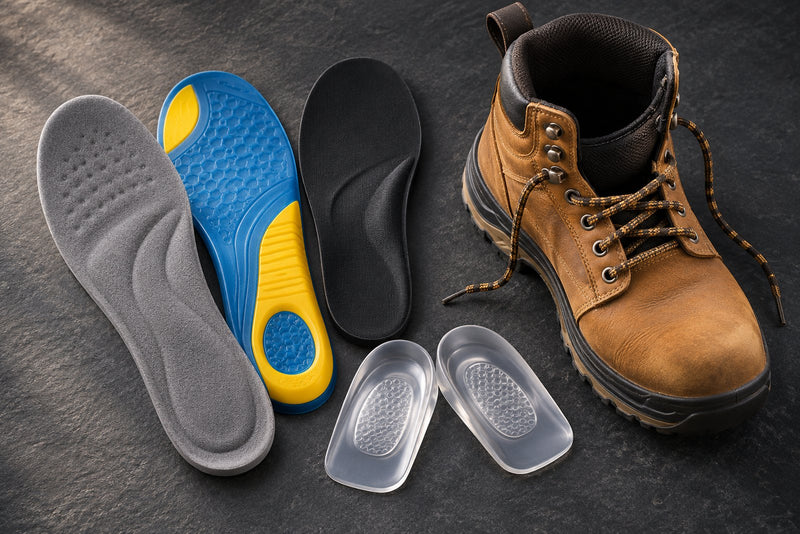
Soft, supportive insole
Memory foam or gel cushions the heel and spreads pressure. Fits most work shoes and boots.
Arch support
Stops the arch from flattening as you tire, which reduces the pull on the fascia.
Silicone heel pad
A small, washable heel cup that softens heel strike in any shoe.
Supportive work shoe
A cushioned, shock-absorbing sole with a firm heel counter, plus protection if you need it.
Heel and arch support


If you need safety footwear, choose a cushioned model with a removable insole so you can add your own support. OrthoSAFE® was designed with orthopaedic support for long days, and our insole guide explains which insole suits which problem.
When to see a GP
NHS advice is to see a GP if:
- the pain is severe or stops you doing normal activities
- it is getting worse or keeps coming back
- it hasn’t improved after two weeks of self-care
- you have tingling or loss of feeling in the foot
- you have diabetes, because foot problems can be more serious
A GP may refer you to a physiotherapist or podiatrist for exercises, taping or custom insoles.
This guide is general information, not medical advice
Frequently asked questions
How long does plantar fasciitis last?
Should I stop working if I have plantar fasciitis?
Are heel pads or full insoles better?
Can safety shoes cause plantar fasciitis?
Take the pressure off your heels
Insoles, heel pads and orthotics that fit the shoes you already wear. Free UK delivery.