Which knee brace do I need? Sleeve, strap, hinged or kneeling pad
Knee supports range from simple compression sleeves to hinged braces and padded kneeling braces for tradespeople. Here is how to match the type to your knee and your day.

Quick answer
Quick chooser
| If your knee… | Choose | Example |
|---|---|---|
| Aches after walking or standing | Compression sleeve | ArthroKNEE® |
| Hurts around or under the kneecap | Patellar support | FlexiKnee® PRO |
| Feels loose or gives way | Side-support / reinforced brace | LigamentPRO® |
| Clicks or catches with twisting | Supportive sleeve that keeps the kneecap aligned | MenisSupport® MAX |
| Hurts from kneeling at work | Padded work knee brace | TileGUARD® / ErgoStep® MAX |
The main types explained
Compression sleeve
Pulls on like a sock. Gives warmth, light compression and a sense of support. Good for everyday aches and under clothes.
Patellar support
An open or ringed kneecap area and straps help keep the kneecap tracking and reduce strain around it.
Reinforced / side-support brace
Side springs or stays limit sideways wobble for knees that feel unstable.
Kneeling pad brace
A shell and thick foam spread the load when kneeling on hard or rough floors.
Knee supports


Knee support for work
Tilers, floor layers, plumbers, electricians and gardeners can spend hours kneeling. Pressure on the front of the knee can lead to soreness and swelling, so a padded knee brace is worth it:
- A hard outer shell for rough or gritty surfaces
- Thick foam padding to spread pressure
- Wide, non-slip straps that don’t cut into the back of the knee
- Breathable fabric if you wear them all day
Kneeling at work


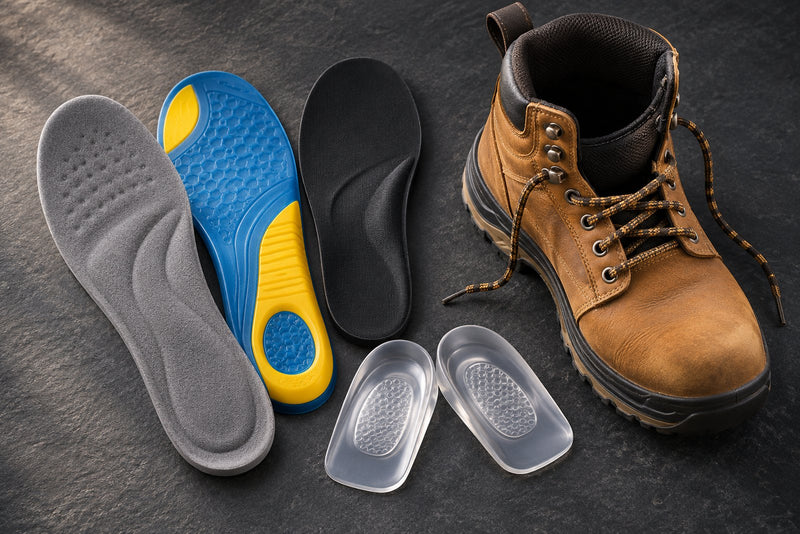
Pair knees with feet
Why knees hurt at work
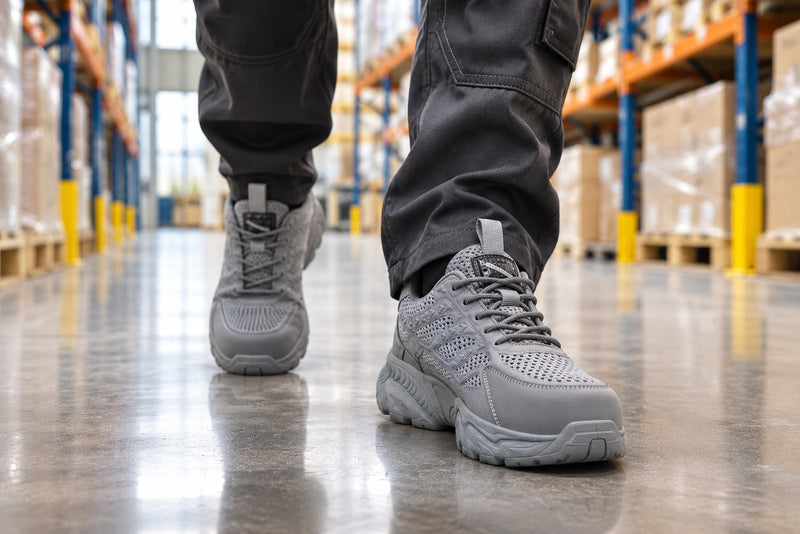
Knee pain at work usually comes from one of three things: kneeling (pressure on the front of the knee), repeated squatting, stairs and ladders (load on the kneecap and tendons), or long hours of standing on hard floors in shoes with little cushioning. A brace can take some of the strain, but it works best alongside good footwear, regular breaks and strengthening exercises for the thigh and hip muscles.
Kneeling
Use a padded knee brace or kneeling mat; change position often.
Stairs and ladders
A patellar support can help; build up thigh strength.
Long standing
Cushioned shoes and insoles reduce the load reaching the knee.
How to get the right fit
-
1
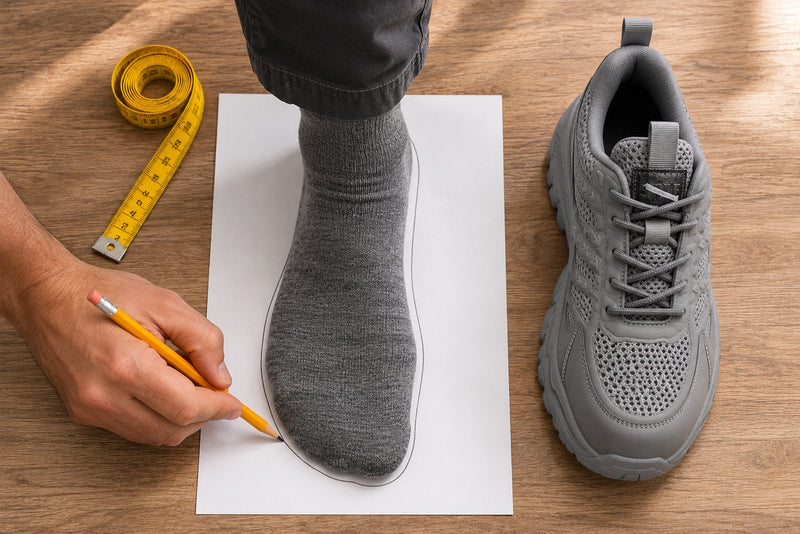
Measure around the knee
Use a soft tape around the middle of the kneecap with the leg slightly bent, or as the size chart on the product page asks.
-
2
Check the size chart
Each brace has its own chart. If you are between sizes, the smaller size usually gives firmer support, the larger more comfort.
-
3
Snug, not tight
You should be able to slide a finger under straps. Tingling, numbness or colour change means it is too tight.
-
4
Test with movement
Walk, squat gently and kneel if you need to. A good brace stays in place without rolling down.
When to see someone first
A brace is not a substitute for a diagnosis. Get your knee checked if it is very swollen, locked or unable to straighten, if it gave way during an injury, if you can’t put weight on it, or if pain persists despite rest.
This guide is general information, not medical advice
Frequently asked questions
Can I wear a knee brace all day?
Should a knee brace be tight?
Will a knee brace weaken my knee?
Which knee brace is best for osteoarthritis?
Find the right knee support
Sleeves, patellar supports, reinforced braces and kneeling pads, with free UK delivery.