Sprained ankle: recovery time and when to wear a brace
Most sprained ankles feel better within a couple of weeks, but the ligaments take longer to regain strength. Here is a simple recovery timeline and when an ankle brace helps.

Quick answer
The first 72 hours
Protect
Avoid putting the ankle at risk; a support or splint can help you move safely.
Rest
Rest it for the first two or three days, then start gentle movement.
Ice
A cold pack in a towel for 15–20 minutes every 2–3 hours. Never put ice on bare skin.
Compression
An elastic bandage or support limits swelling. Take it off at night.
Elevation
Keep the ankle raised, ideally above the level of your heart.
Avoid HARM
For the first few days avoid Heat, Alcohol, Running and Massage, which can increase swelling.
Recovery timeline
| Stage | Typical time | What it feels like | What to do |
|---|---|---|---|
| First days | 0–3 days | Pain, swelling, bruising | PRICE; walk short distances if you can |
| Early recovery | About 1–2 weeks | Swelling going down, walking easier | Gentle range of motion; support for longer walks |
| Rebuilding | 2–6 weeks | Mostly comfortable, can feel weak or unstable | Balance and strength exercises; brace for work or sport |
| Back to full activity | 6 weeks + | Normal, but ligaments still strengthening | Keep exercises up; consider a brace for high-risk activity |
These are general timescales. Recovery depends on how bad the sprain was, your age, and whether you have sprained the same ankle before. Repeated sprains are common if the ankle isn’t strengthened after the first one.
When an ankle brace helps
A brace doesn’t heal the ligament, but it can make recovery easier and safer:
- Early on: compression helps control swelling and gives you confidence to walk
- Returning to work: on ladders, uneven ground or long shifts, support reduces the chance of rolling the ankle again
- Back to sport: football, basketball, running and court sports put sideways load on the ankle
- Old, “weak” ankles: if you have sprained the same ankle several times, many people wear a support for risky activities
Don’t rely on the brace forever
Which type of ankle support?
| Type | Support level | Best for |
|---|---|---|
| Compression sleeve | Light | Mild sprains, swelling, everyday comfort, sport |
| Strap / cross-strap support | Medium | Returning to sport or work; adjustable support that fits in shoes |
| Semi-rigid splint | Firm | More severe sprains and unstable ankles; protection while you heal |
Ankle supports


Not sure which one? Light compression (FlexiANKLE® AIR) suits mild sprains and sport, cross-strap supports (FieldSupport®) fit inside work shoes, and a semi-rigid splint (AnkleFIX®) gives the most protection. See all ankle braces.
Going back to work
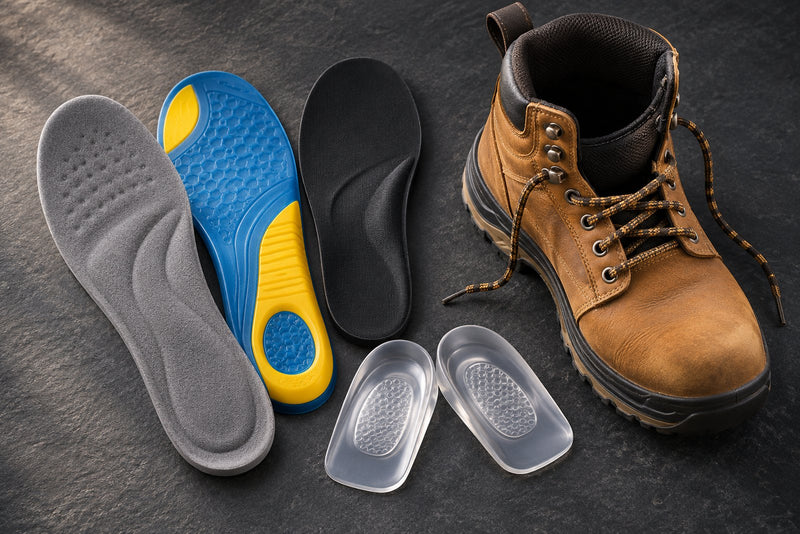
If your job involves stairs, ladders, uneven ground or heavy lifting, ease back in. Ankle-height footwear adds stability: a safety boot or high-cut safety shoe supports the ankle better than a low trainer. Lace firmly around the ankle and add a slim support that fits inside the boot.
Ankle-height protection


When to get urgent help
Go to urgent care or call NHS 111 if:
This guide is general information, not medical advice
Frequently asked questions
Should I wear an ankle brace to bed?
Can I walk on a sprained ankle?
How do I know if it is broken or sprained?
How long should I wear an ankle brace after a sprain?
Support for the way back
Compression sleeves, cross-strap supports and semi-rigid splints, with free UK delivery.