Safety boots vs safety shoes vs safety trainers: which do you need?
Boots, shoes and trainers can all carry the same safety rating. The real differences are ankle support, weight, warmth and water resistance. Here is how to choose.

Quick answer
Side-by-side comparison
| Safety boots | Safety shoes | Safety trainers | |
|---|---|---|---|
| Ankle support | High | Low to medium | Low |
| Weight | Heaviest | Medium | Lightest |
| Breathability | Lower | Medium | Highest |
| Water and mud | Best (especially S3/S7) | Good with S2/S3 | Light rain at most |
| Debris getting in | Least | Some | Some |
| Typical rating | S3 | S1P, SB P, S3 | SB P, S1P |
| Best for | Sites, groundwork, outdoors | Mixed work | Warehouses, logistics, indoor |
Safety boots
Ankle-height, usually S3, built for rough ground and weather.
Safety shoes
Low-cut, versatile, a good middle ground.
Safety trainers
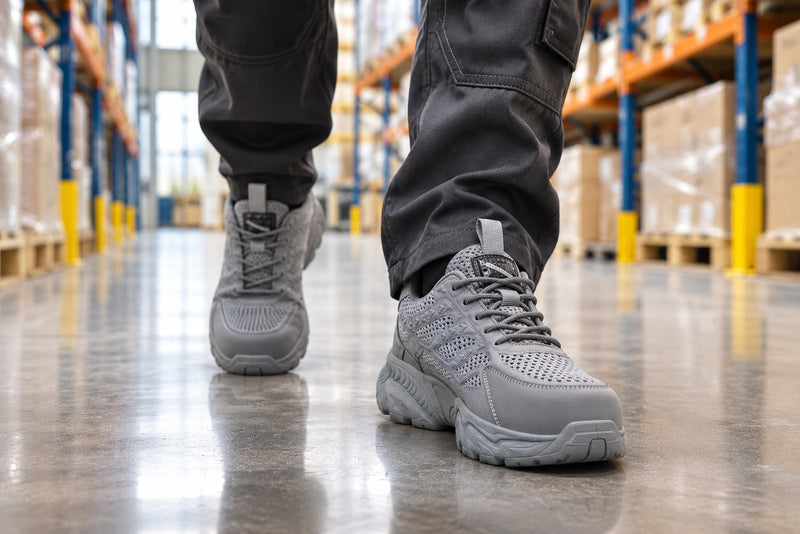
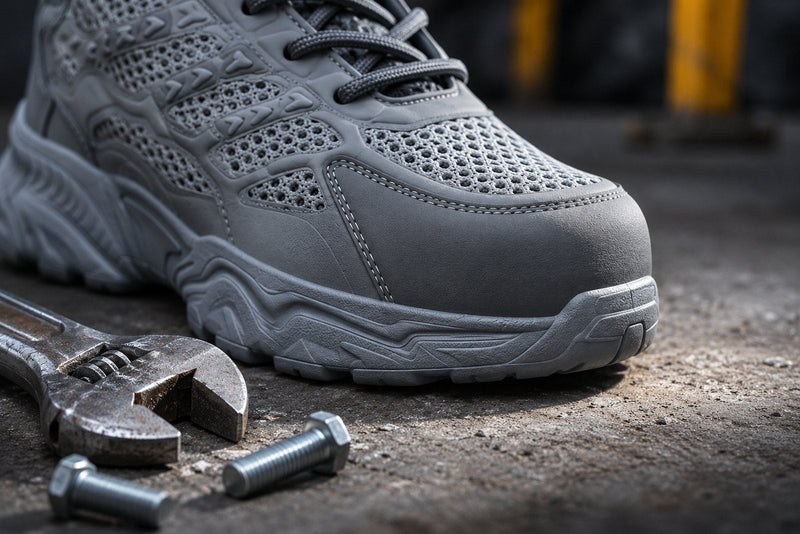
Trainer shape and weight, with a certified toe cap inside.
When to choose safety boots
- You work on uneven, muddy or loose ground (building sites, landscaping, groundwork)
- Your site rules require ankle support
- You work outside in wet or cold weather
- You climb ladders or scaffolding and want more stability
- You have weak or previously sprained ankles
Safety boots


Laceless boots like ELYTGUARD go on and off in seconds, while ELYTFLEX adds water resistance for outdoor shifts.
When to choose safety shoes or trainers
- You walk long distances on flat floors (warehouses, distribution centres, retail)
- You get hot feet and want breathable mesh
- You drive between jobs and want a flexible sole
- You want protection that looks like a normal trainer
Safety shoes and trainers


Want something in between?
By job
| Job | Usual choice | Look for |
|---|---|---|
| Construction, groundwork | Safety boots | S3, ankle support, cleated sole |
| Warehouse, logistics | Safety trainers / shoes | SB P or S1P, cushioning, light weight |
| Kitchens, catering | Safety shoes | Strong slip resistance, easy-clean upper |
| Delivery drivers | Safety trainers | Light, flexible, puncture-resistant |
| Electricians, engineers | Safety shoes or boots | Check site rules; consider non-metal options |
| Landscaping, farming | Safety boots | S3 or S7, water resistance |
Whatever you choose, the protection rating matters more than the style. Our ratings guide explains the codes.
What matters more than the style
Two pairs can look completely different and offer identical protection, or look the same and be very different inside. Before you choose a style, check these four things:
Toe cap
Certified to 200 J impact and 15 kN compression. Steel or composite both pass the same test.
Midsole
Puncture-resistant (P, PL or PS) if there are nails, screws or glass on the floor.
Outsole
Slip resistance for your floor, and a cleated sole for mud and loose ground.
Weight and cushioning
A light, cushioned shoe or boot means less fatigue at the end of a long shift.
Common mistakes
- Buying boots for an indoor, flat-floor job and suffering with heat and weight all summer
- Choosing a low trainer for a muddy site because it feels comfortable in the shop
- Ignoring the rating label and assuming any “work shoe” has a toe cap
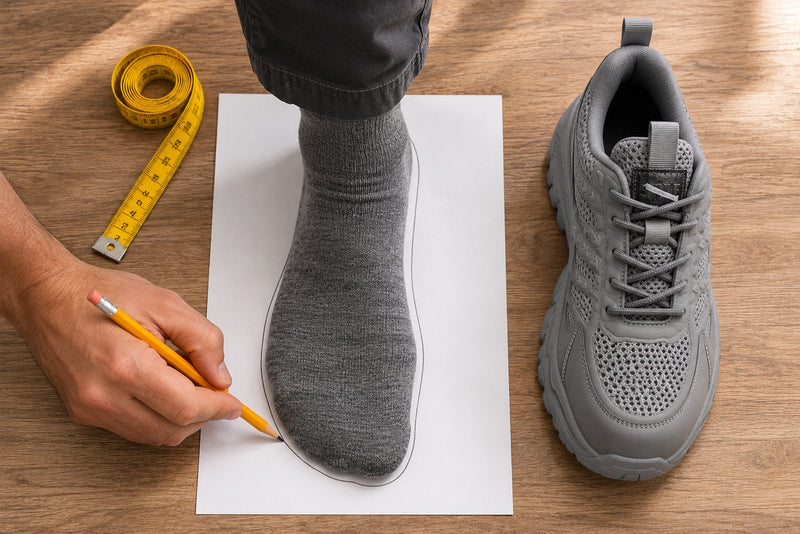
- Buying a size too small: the toe cap won’t stretch. See how safety shoes should fit
Frequently asked questions
Are safety trainers as safe as safety boots?
Can I wear safety trainers on a building site?
Which is more comfortable, safety boots or shoes?
Do safety boots need breaking in?
Boots, shoes or trainers: all certified
Free UK delivery and 30-day exchanges if the style isn’t right.