Steel toe cap vs composite toe cap: what is the difference?
Steel and composite toe caps pass the same 200 joule test. The differences are weight, thickness, how they handle cold and heat, and metal detectors. Here is how to choose.

Quick answer
What they have in common
A certified toe cap of either material passes the same tests. The rating on the label (SB, S1P, S3…) tells you the protection level, not the toe cap material. Our safety ratings guide explains those codes.
200 J impact
Roughly a 20 kg weight dropped from about a metre.
15 kN compression
About 1.5 tonnes of crushing force.
Steel vs composite at a glance
| Steel toe cap | Composite toe cap | |
|---|---|---|
| Protection rating | 200 J / 15 kN | 200 J / 15 kN |
| Weight | Heavier | Lighter |
| Thickness | Thinner, so the toe box can be slimmer | Thicker, so the toe can look bulkier |
| Cold and heat | Conducts temperature | Insulates better |
| Metal detectors | Will set them off | Metal-free |
| Electrical work | Metal: check site rules | Non-conductive |
| Price | Usually lower | Usually higher |
Why choose steel
- Proven and durable. Steel is the traditional choice and handles repeated knocks well.
- Slim toe profile. Because steel is thin, the shoe can look and feel more like a normal trainer.
- Good value. Steel toe caps usually cost less, so the money goes into the sole and comfort.
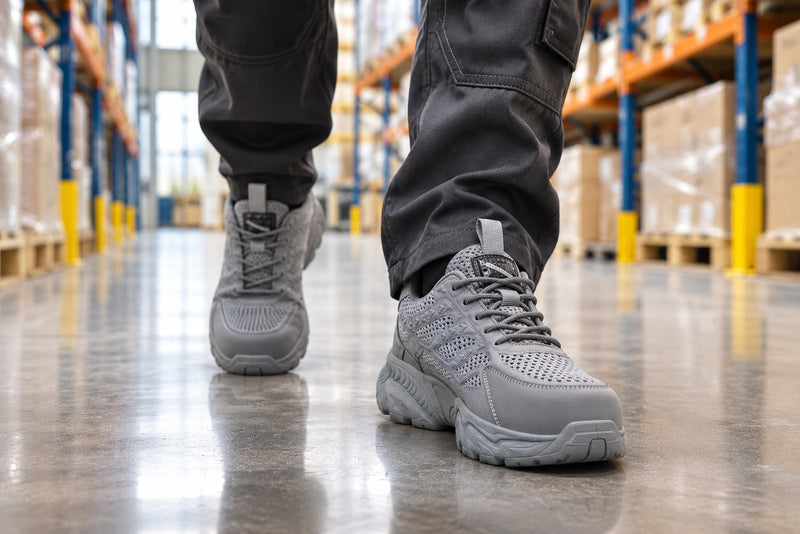
- Lighter than it used to be. Modern steel-toe trainers use lightweight soles and mesh uppers, so the overall shoe can still be light.
Steel toe cap safety footwear


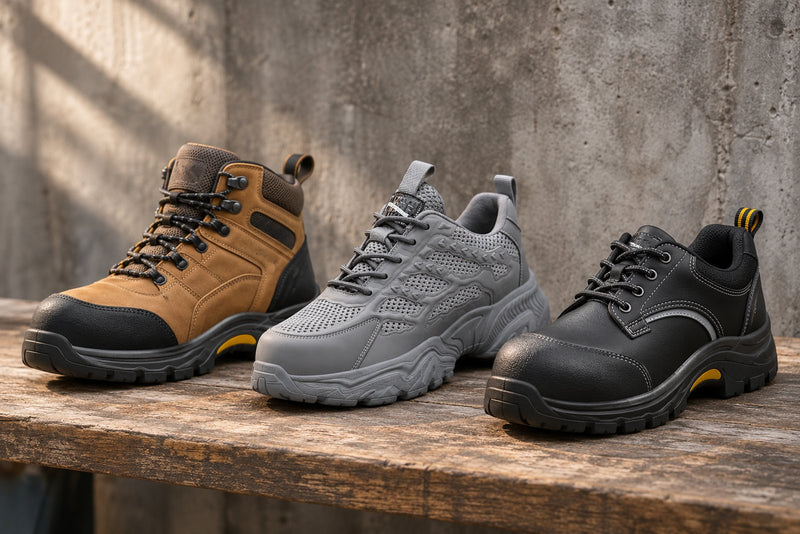
Every ElytStep safety shoe and boot uses a steel toe cap tested to 200 J, paired with a Kevlar-fibre anti-perforation midsole to keep weight down underfoot. Browse the full steel toe cap collection.
Why choose composite
- Airports, security and some factories where you pass through metal detectors several times a day
- Cold stores and outdoor winter work, where steel can feel cold
- Electrical environments where the site asks for metal-free footwear
- You want the lightest possible toe cap and don’t mind a slightly bulkier toe
Don’t forget the midsole
3 common myths
-
1
“Composite is weaker than steel.”
False. Both must pass the same 200 J and 15 kN tests to be certified.
-
2
“A steel toe cap can cut your toes off.”
This is a popular myth. Toe caps are designed to protect the toes in heavy impacts that would otherwise crush them.
-
3
“Steel toe shoes are always heavy.”
Not any more. Lightweight soles and mesh uppers make modern steel-toe trainers comparable to many composite models.
What about aluminium and other materials?
You will also see aluminium toe caps. They sit between steel and composite: lighter than steel and thinner than composite, but still metal, so they set off metal detectors. Some workwear brands also use carbon or glass-fibre blends. Whatever the material, the certification is what tells you it protects to 200 J.
How to choose in 30 seconds
| Your situation | Best choice |
|---|---|
| General warehouse, logistics, delivery | Steel (great value, slim, light enough in modern trainers) |
| Airport, security, metal-detector checkpoints | Composite with a non-metal midsole |
| Cold store or long outdoor winter shifts | Composite, or steel with thermal socks or a heated insole |
| Electrical work | Follow site rules; often metal-free footwear |
| Tight budget, heavy daily wear | Steel |
For cold shifts

Frequently asked questions
Are steel toe caps safer than composite?
Do steel toe caps get cold in winter?
Do steel toe caps set off airport scanners?
Should I replace a safety shoe after a heavy impact?
Steel toe protection, trainer comfort
200 J steel toe caps and Kevlar midsoles in lightweight shoes and boots.